
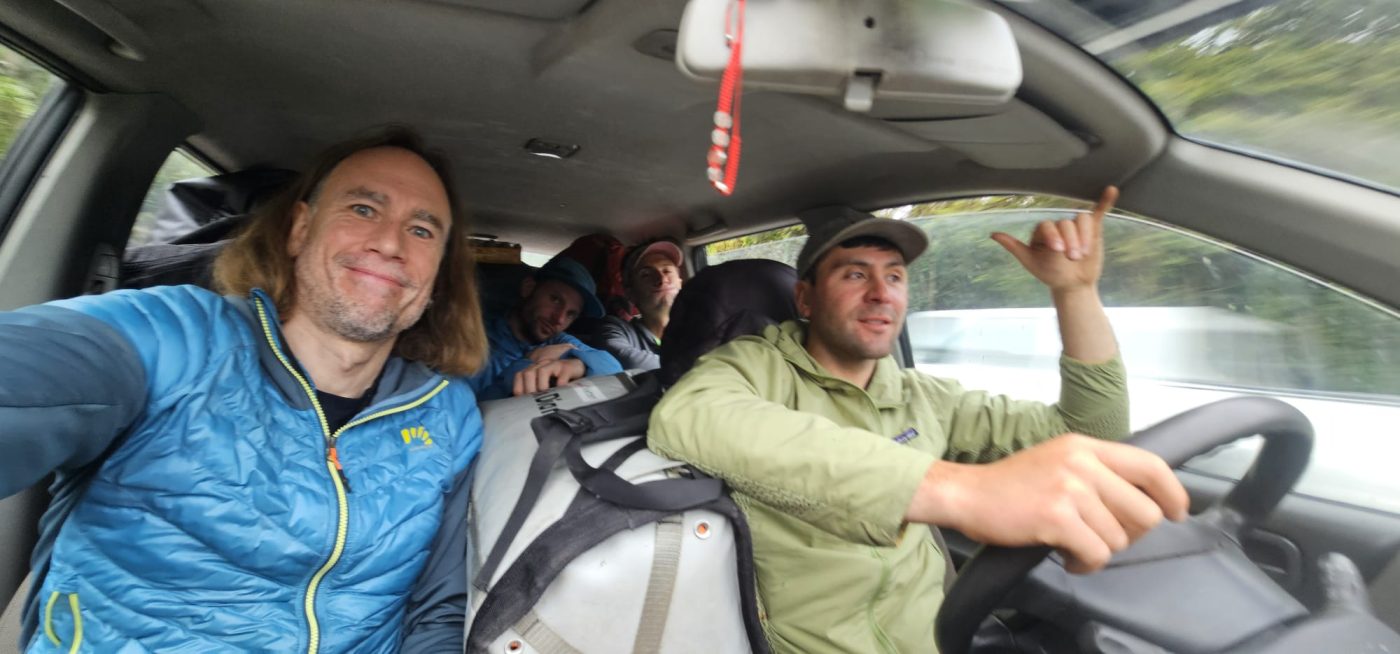
Deep in the wild Cochamó Valley of Chile, where massive granite walls rise above lush jungle and unpredictable mountain weather, true climbing adventures still exist. This was exactly where Jernej Kruder set off on his latest expedition — searching for adventure and the possibility of opening a new long route high above the valley floor. Together with Mirco Grasso from Italy and Vladek Zumr from Switzerland, the journey quickly became a story of exploration, persistence, and friendship. Between long jungle approaches, days of relentless rain, and intense moments on the wall, a new line slowly began to take shape in the vast granite amphitheatre.
Back home, our team at ClimbingGym Heaven followed Jernej’s expedition with great excitement and pride, cheering for every step of the journey as he pushed higher into the unknown.
——————————————-
Cochamo 2026
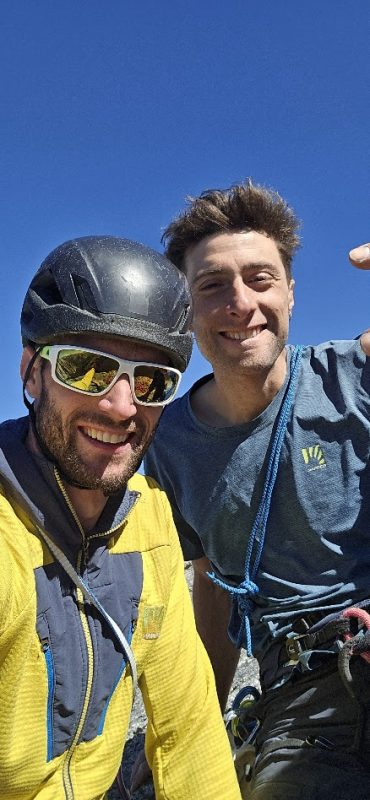
As a former boulder competitor transforming into an alpine climber, Cochamo was probably the best choice to try something new – opening a new long route in granite. With just a very few trips together in the past, I found myself in a valley with Mirco Grasso from Italy. We immediately caught a flow! For even more fun and good documentation, Vladek Zumr from Switzerland was the third face of the expedition.
With the pleasant hospitality of a local guy, Diego, we were nicely hosted at his place near Puerto Montt for the first night, and later transported to the starting point of the Cochamo hiking trails. We had to pack the bags in equal weights so we could put them on the horses’ backs. Since we bought lots of food (3 people, 3 weeks) and had lots of equipment of our own, we had to take 4 horses. The 3-hour hike to the campsite was surprisingly fast and easy, probably thanks to the beautiful jungle-like trails. Once on site, we waited for the horses to bring up the camping gear, which arrived quite soon after us. We set up the tents in Trawen and moved into the common room to make plans for the next day.
Mirco and I were hungry to find a line we could potentially open, but we knew we had to do some existing routes to get to know the place and see the walls up close. We decided to try a classic route in the Anfiteatro valley called Dona Devora Dedos.
——————————————-
DDD
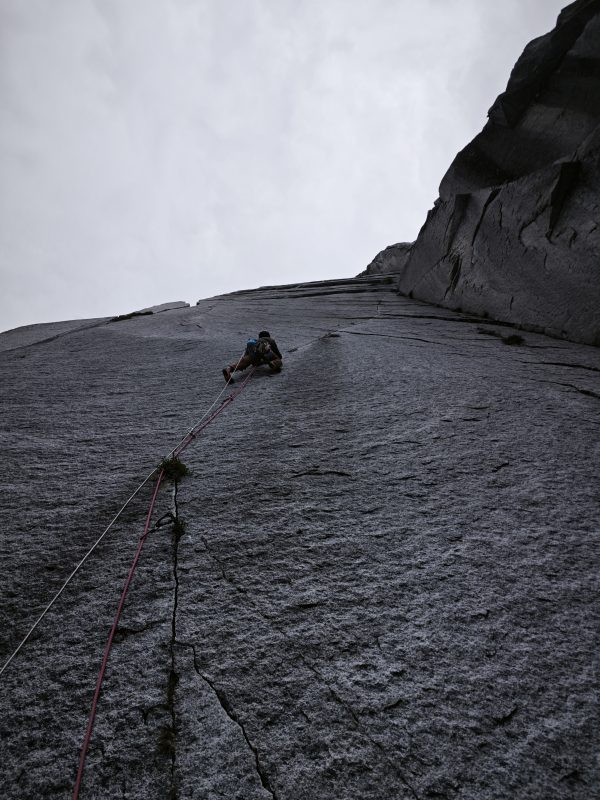
Slightly tired but super motivated, we started our almost 3-hour walk to the base of the route. I won the draw and started our first climb of the trip. The first two pitches were a nice introduction into beautiful, well-protected cracks, but the third one was already the real deal. A super tiny slab crack with very technical footwork and small gear was a good wake-up call for me.
The rest of the route flowed well until we reached the “hardest” pitch. The 5.12c layback was led by Mirco without major problems, until he reached the end of the overhang, where he slipped due to a few raindrops. The same happened to me. The rain stopped and we pushed one more pitch. After that, the rain forced us to go down. With a few wet rappels, we reached the base and walked back to camp in the rain.
——————————————-
New Route Spotted
We didn’t want to spend time figuring out what to do next, so we decided to start pushing the line toward the obvious crack above Anfiteatro, which we spotted on our first day. The hot sun pushed the rain away and we started working on a new route.
After a few awkward pitches, the route was okay, but I had a constant feeling that the crack we wanted to reach had already been touched by human hands, since I kept seeing bolts to our right. As soon as Mirco reached the base of the crack, I heard words of disappointment: “Somebody was here before, there’s an anchor here.”
But the crack looked so good I had to give it a go. I was lacking some cam sizes, but the climbing was great. Burned by the sun and disappointed that we didn’t know about the route, we rappelled down to seek shade and water.
——————————————-
Entre Cristales e Condores
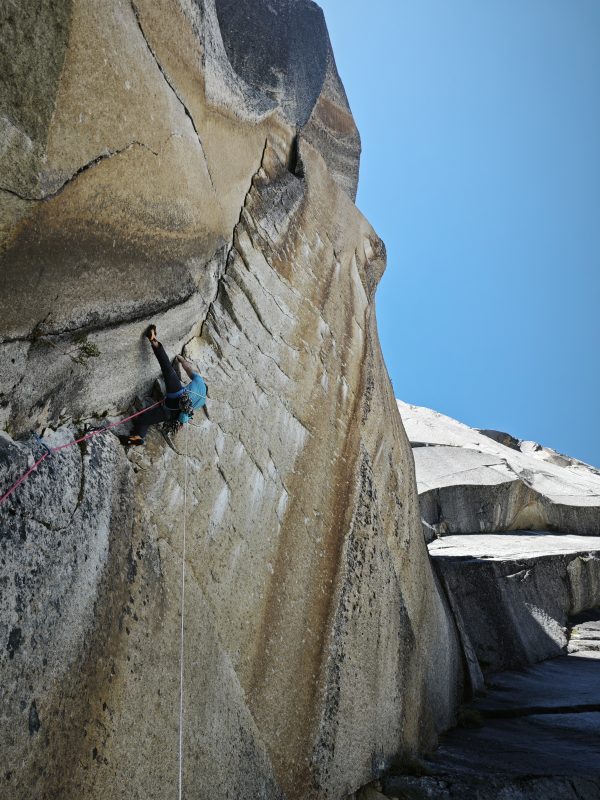
The day in the sun took all our energy, so we had to take a forced rest day on what was supposed to be the best weather day. The next day, the sun hit again and we had to wake up early to catch the shade in “Entre.” We were fast, but I had to retry the first technical 5.12a pitch.
The rest went faster and we reached the crux pitch just before the sun hit the wall. I started my onsight attempt on 5.13b and reached halfway. By that time, the sun hit the wall and my climbing turned into hell. I was barely aiding up from cam to cam. Mirco was also struggling on the last 5.12a pitch when we finally reached the top.
Vladek, Mirco and I quickly found a few spots to hide from the sun. I really wanted to try the crux pitch again, but definitely not in the sun. We spent almost five hours on top of the wall. I took some pictures of the surrounding walls, and we were especially impressed by the Walwalun peak. It must have been around 7 pm when we finally went back down.
Mirco sent the last pitch and I checked the gear on 5.13b. Just as I got ready, the sun left the wall. I entered the pitch and quickly progressed higher and higher. I passed some critical points and finally reached a good rest. Only 8 meters were left above me. The finger crack was hard, but I fought hard. At some point I couldn’t get my fingers unjammed and lost all the energy I had left. I took a heartbreaking fall, just 3 meters from the anchor.
Disappointed, but also happy that I got so close to the chains on my second go. I left every part of me there, so we decided to go down. The long day finished shortly after midnight.
——————————————-
Scouting
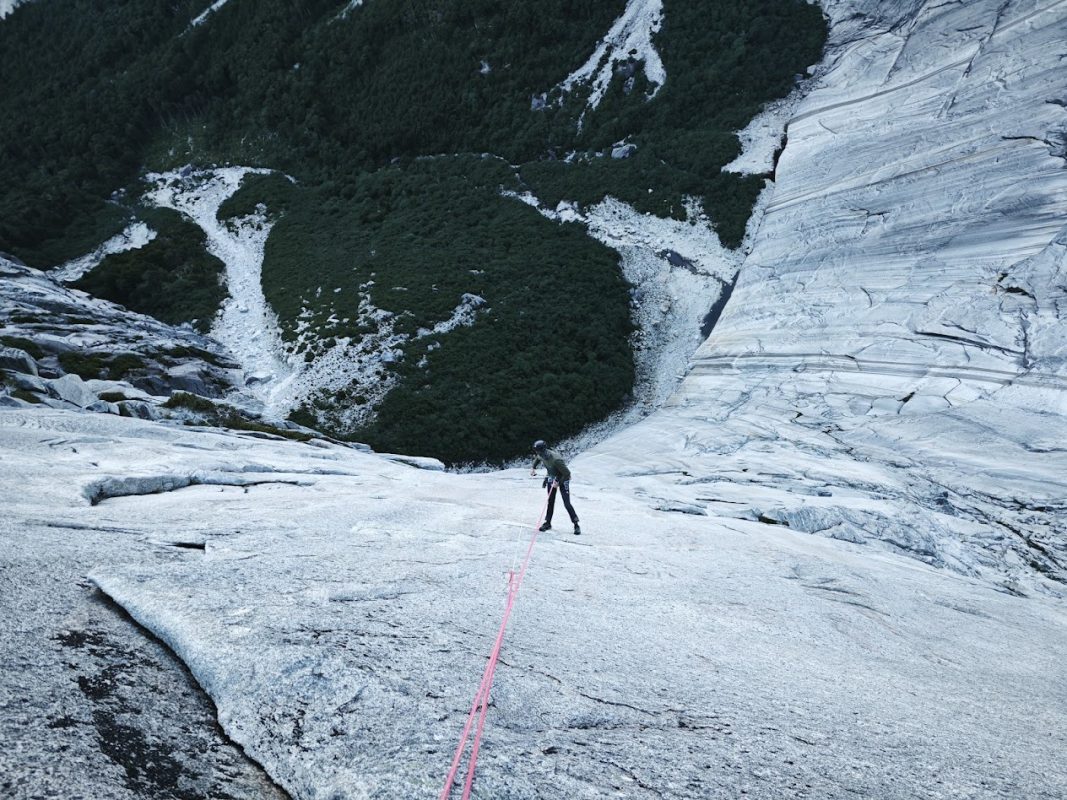
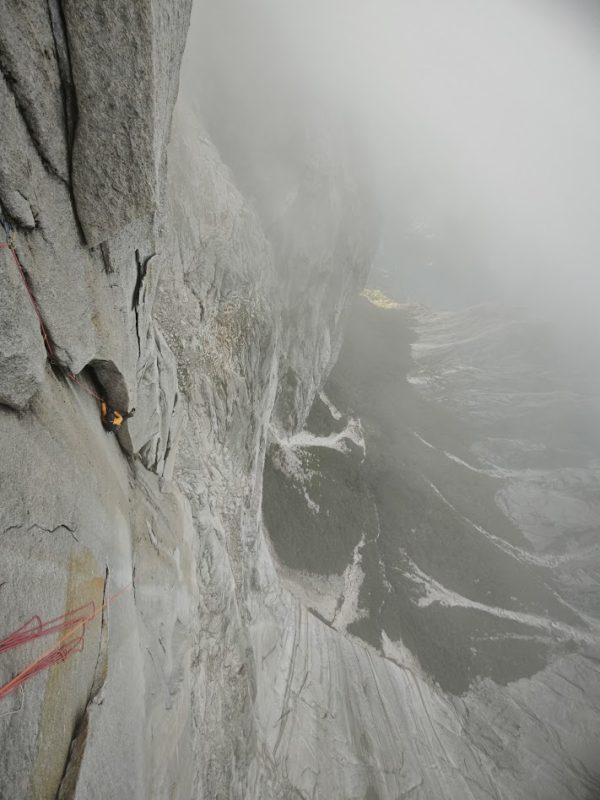
Fourth night sleeping in the Anfiteatro bivy. Before the next rain kicked in, we had a quick climbing day on an easy route on Walwalun. The goal was to check around and see if we could find a free line. The day before, we had marked some possibilities, so we checked everything we could during our day on the wall. Happy not to find any traces of existing routes, we returned to camp late at night.
——————————————-
Tarock
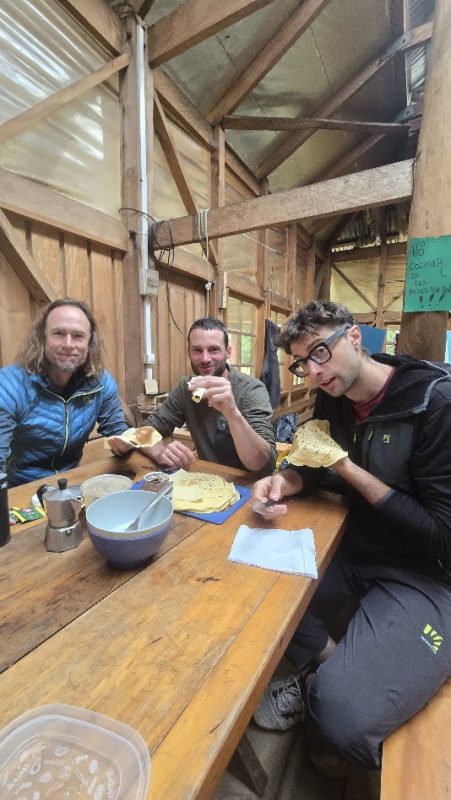
Another three days of rain in the valley. To make those days more interesting, I taught Vladek and Mirco how to play a complex card game originating from the lands where I come from – Tarock. On the first day of rain, we must have played around 30 rounds, and we were all happy about it because it made the time pass faster.
Meanwhile, we visited a sport crag that is apparently always dry – Paret Seca. The place is small, but just good enough to have some fun while it’s raining. I onsighted all three classic routes (up to 7c+), then moved to the short project on the right. I heard this route was bolted for Alex Honnold back in 2012, but never freed. It was quite dusty and maybe not bolted in the best way. But after spending some time on it, I found a very interesting feet-first method. Some American friends lent me a kneepad, so I sent it on my second go. I didn’t feel too good about my ethics, so I had to do it again – this time without the kneepad. I put a grade on 8b on this one.
The next day we prepared all the gear for opening a new route and started walking towards Anfiteatro for the third time on our trip.
——————————————-
Day One
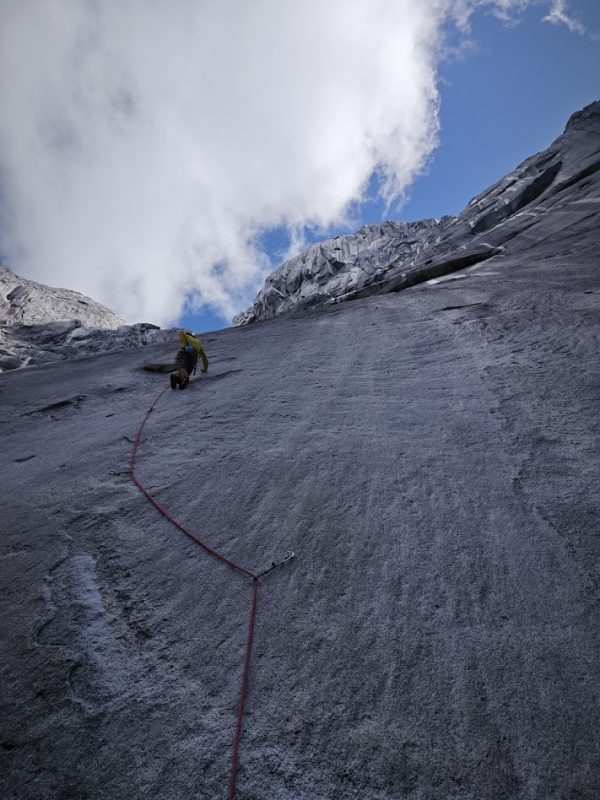
An early morning alarm woke us into a cold morning. I told the guys I wanted to hear a power drill at 7 am. We took a half-hour walk. As we knew, to reach the first obvious crack we would have to protect the climb with bolts on an “impossible” slab. So a few minutes after 7, I heard the sound of the power drill as Mirco placed the first bolt on the route.
After placing three more bolts, he let me finish the upper part of the pitch. I was checking the features on the glassy slab, and my eyes were sparkling when I realized there were just enough edges to make it possible. I placed an anchor on an obvious ledge.
Mirco placed two more bolts on pitch two before reaching the crack system. The slab part was easier than the first pitch. Pitch three was easy and fully protected with removable gear. I even built an anchor with only cams. Mirco followed and moved into another crack system.
Just before entering the big dihedral we were aiming for, he placed another bolt on the crux slab and drilled another one for the anchor. I followed without falling.
The trad start of the next pitch was easy for me, but then the dihedral showed its teeth. The crack we had seen from below was completely closed. I was forced to leave four bolts on the slab underneath the roof.
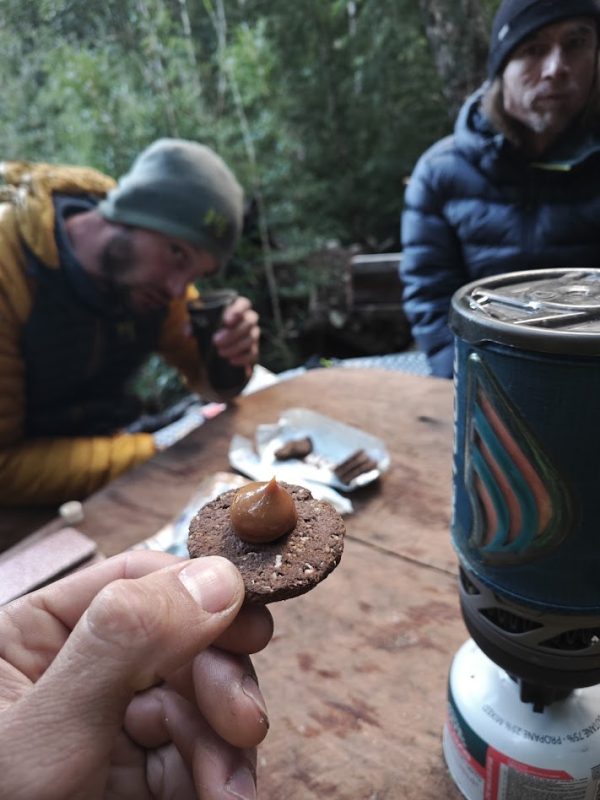
Three easier pitches on removable gear followed. The last one of the day was led by Mirco. He had some small trouble finding the easiest passage. When he finally found it, I was already quite frozen and we were both tired. We called it a day.
——————————————-
Day Two
We had left some gear on the ledge below pitch eight, at the anchor of the French route, the day before. For that reason, we were back quickly via the French route. This time Vladek joined us.
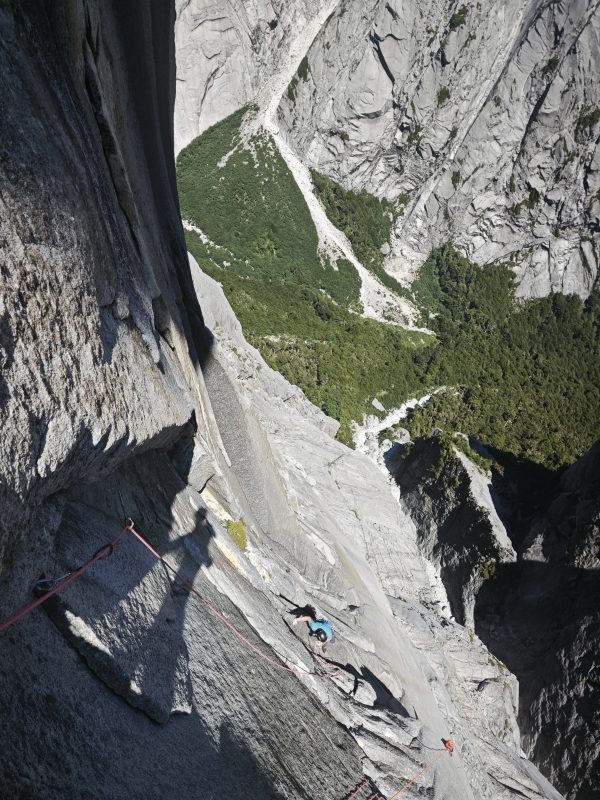
Mirco climbed the slight overhang again, and also the next pitch, which finally joins the big ledge. There we untied and walked a bit higher, where we set up a bivy. With Mirco, I traversed to the base of the headwall. We still had time to open another pitch or two.
We reached the anchor of the Italian route, from where we wanted to move left. The first 10 meters I climbed on “Perdidos,” then I turned left at the roof. It was wet, so I made a few moves with the help of trad gear. Then I reached an existing anchor. We read some descriptions and knew that a party had given up on that line a long time ago.
Mirco finished the day by aiding and cleaning pitch 12, which seemed super hard. I didn’t even try, since I got very cold again. We went two pitches down to the ledge, where we had dinner and observed the clear night sky.
——————————————-
Day Three
No early morning start. We waited for the sun to come out — it would have been too cold in the shade anyway. We jumared up the two pitches and I started opening the next one. It was an amazing pitch, but full of moss in the first finger crack section.
The line naturally guided me upward, and the same happened with the next two easier pitches, until we finally reached the last dihedral. We were getting close to the top. Mirco started leading his way up, making some interesting moves to follow the weaknesses of the wall. He placed three pitons.
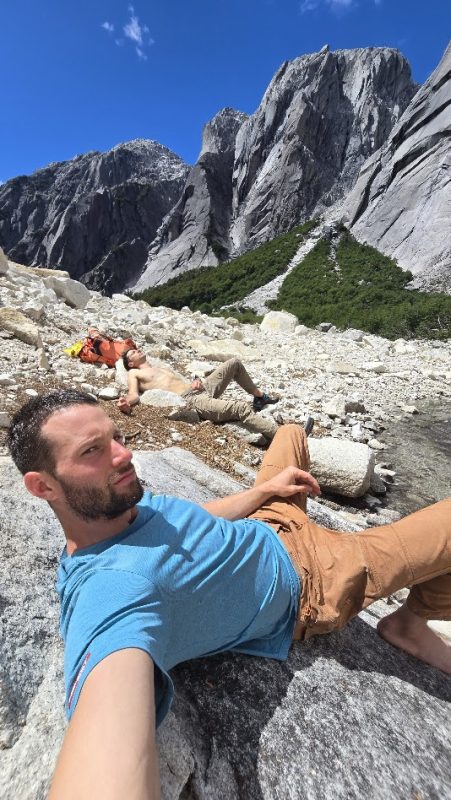
Dirty and exhausted, he asked me to continue. The last few meters were dirty, which is why it took us quite a while to reach the next small ledge. One last easier pitch and we found ourselves on the top. We were amazed at how well the line had worked out.
We went back down to the ledge and decided to spend another night in this beautiful place.
——————————————-
Day Four
Day four was easier. We did some photo shooting on the second pitch above the ledge. I was still afraid it was going to be too hard to finish in the short time we had left, so I came up with the idea to make a detour pitch and keep the harder one for next time.
We had one last bolt left. I swung to the right of the original pitch and placed it in the middle of the face. While shooting, we focused on the right variation. Both Mirco and I climbed it twice and graded it 7b+. Since some flakes are quite hollow, we decided to call this pitch “Deadly Hollows.”
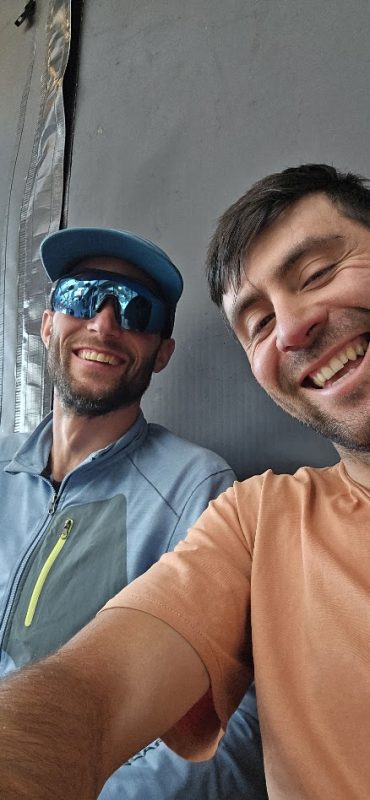
The hard variation was still wet, but I decided to give it a top-rope go, just to see if the moves were possible. Even though the crack was wet, I managed to do all the moves. With smiles on our faces, we went down to the camp to prepare for the upcoming rain.
——————————————-
Crises
The next few days in the valley were terrible. Lots of rain and even snow on the tops of the peaks. That didn’t mean anything good for our push to free the whole line. It was cold and the motivation was super low. At least we had Tarock!
We drew the sketch of the route and hoped it would dry up enough to finish at least the last four remaining pitches that we hadn’t been able to free climb.
——————————————-
Back in Amfiteatro
We had four days left. The snow on the tops of the peaks hadn’t really started melting. The temperature was low and going back up again seemed quite utopic. But we had nothing else to do. So we hiked up.
Vladek wanted to take some pictures and I wanted to lead the first pitch, since I hadn’t done it on the first day. Because it’s so slabby, it remained dry, so I was able to do it. The rest of the route was completely wet. Small waterfalls were marking our line and our hearts were disappointed.
To make it even worse, the rain came back during the night. Luckily, it at least melted some snow on the top.
The next day we were back at the base of the wall. The fifth pitch seemed dry enough to try to free it. The rest was still drowning in small rivers. Via the French route, we somehow managed to reach the anchor of “Interstellar” — that’s what we called the pitch because of its look.
There was a small stream interrupting our belay. I decided to try it anyway. Climbing the easy first part on wet holds wasn’t a problem. A small ledge before the slabby crux was dry, so I could dry my feet and hands. I pushed through the rest of the pitch, even though the sun had already warmed up the slab. We were happy enough to call it a day. We didn’t want to go up to the headwall — it seemed far too wet.
——————————————-
Final Act
For the last two days, we planned to stay on the ledge again. Just before entering the route, we came to the conclusion that it wasn’t worth going up for two days, since we wouldn’t have much time on the second day anyway.
We decided to go light and fast, taking only the few things we needed. Within two hours we were at the big ledge via the French route. The top part didn’t look too promising, but as I said, we had nothing to lose.
We climbed the first two pitches of the headwall free again. The third pitch, which had been too dirty to climb during our first push, now had a waterfall running down the left side of the crack. The right side was dry.
Mirco started the pitch and, with a lot of discomfort, reached the anchor without falling. The cams made the crack wet on both sides, so I had to fight even harder not to fall while following.
After the next two pitches, we finally reached the last fortress — “Ultimo Pagat.” The final test piece of the route.
I entered. The first part was dry and so much fun to climb. Even better than I had thought while jumaring it up the last time. I reached the last 10 meters without problems. Then I entered the wet dihedral. It was a life-or-death fight to finish it. Mirco, coming after me, seemed a bit more relaxed than I was, but it still wasn’t easy — not even for him.
The hard variation was unfortunately far too wet and will have to wait for my next visit. Good thing we found an easier variation, so now the whole route has been climbed free.
——————————————-
Asado
Our way down was accompanied by sunshine. We said warm goodbyes to the great people of Trawen camp and headed back to civilization.
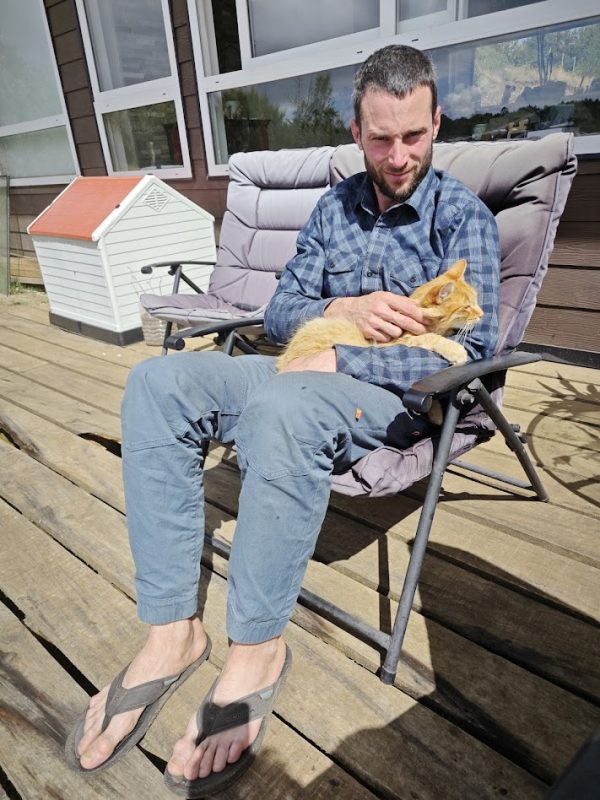
The beer tasted so good after not having one for three weeks. But even better was the asado we prepared at Diego’s scenic place near the lake. A bit of kayaking and some bouldering on Diego’s small wall was the perfect way to say: “Goodbye — we’re coming back!”